Schreiben Sie uns!
Rufen Sie uns an!
When laboratory processes rely on reliable water quality, mediocrity is not an option. Ultra pure water systems must deliver precisely what analytical procedures require: high purity, which must be ensured with consistent quality.
For over 30 years, membraPure has been developing and manufacturing highly specialized systems for laboratory water treatment in Germany. Rely on membraPure’s easy-to-use pure water systems and ultra pure water systems. Easily produce Type I or Type II water from pretreated water and tap water.

For over three decades, membraPure has been an expert in laboratory water treatment with development and production in Germany.

Durable components and low maintenance requirements sustainably reduce your overall costs.

Large touchscreen and self-explanatory symbols make it easier to use our systems

Modular configurations enable customer-specific integration into the laboratory landscape
Ultra pure water systems are used to produce water of the highest purity for use in laboratories. They remove dissolved ions, organic compounds, particles, and microorganisms. Various technologies such as reverse osmosis or ion exchangers are used for this purpose.
Ultra pure water systems from membraPure Systems deliver laboratory water according to ASTM Type I, Type II, or Type III. Parameters such as conductivity, electrical resistivity, and TOC are reliably monitored and documented by integrated sensors.
Choosing the right system depends on several factors.
To select the right system, we like to use the FACT formula:

Experience that creates trust: Since 1993, membraPure has been selling ultra pure water systems for laboratories worldwide with its own development and production in Germany.
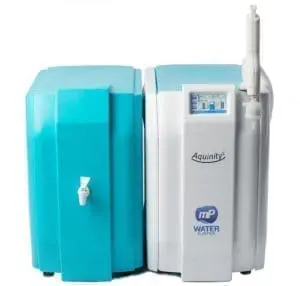
Consistently geared towards integration into laboratory processes: Over 30 device configurations as ready-to-connect tabletop, under-counter or wall-mounted ensure maximum flexibility in practice and planning.
Globally networked, locally supported: With over 30 international partners, membraPure offers worldwide support – personally and very often in the relevant national language.
Climate-neutral production: membraPure has been a climate-neutral company since 2021 after offsetting emissions – a clear commitment to responsibility and sustainable business.



General applications
Buffer and media production without special requirements, feeding of laboratory dishwashers

Analytics
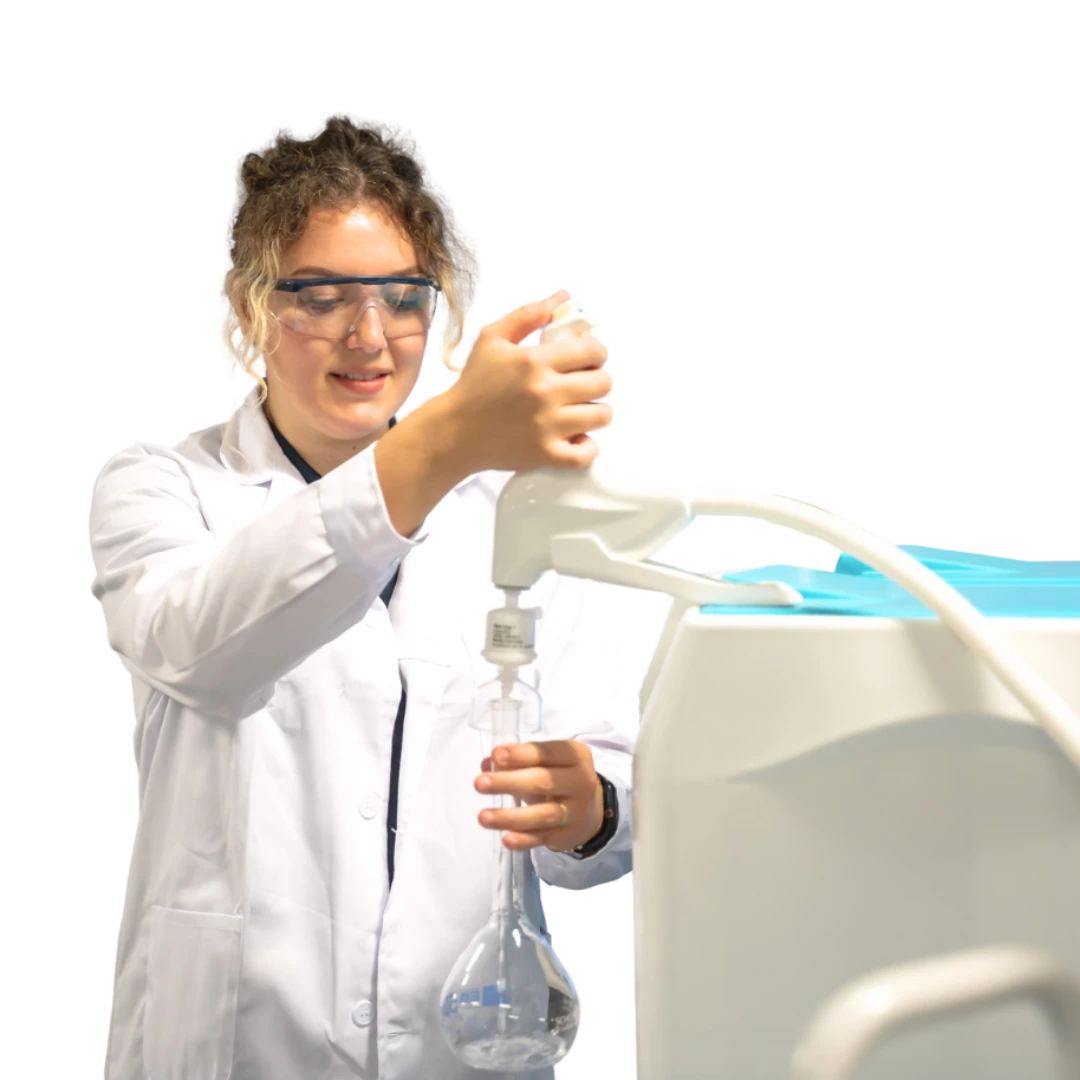
Sample preparation for analytical methods such as spectroscopy & chromatography (HPLC, GC, MS)

Life Science
Providing various media and solutions with specific requirements for cell culture, biotechnology, microbiology
Clinical Laboratory
Providing germ-free water for steam sterilizers and clinical analyzers

Energy generation
Providing purified water for electrolyzers to produce green hydrogen
Made in Germany – Quality without Compromise
For three decades, membraPure has stood for German engineering excellence in laboratory water treatment. All devices are developed, manufactured, and shipped worldwide in Hennigsdorf near Berlin. Regular testing of our raw materials and development processes ensures consistently high product quality. This increases reliability and service life while reducing maintenance requirements. For users, this means a long-term reduction in operating costs.
Did you know? Products manufactured in Germany achieve an average service life that is up to 35% longer.
Perfectly adapted to your environment and application
Whether as a tabletop device, under-counter version, or wall-mounted: membraPure offers numerous variants that integrate seamlessly into any laboratory infrastructure, making everyday laboratory life a little more friendly and pleasant.
Technical intelligence that thinks for itself
What distinguishes membraPure systems is not just the values on the data sheet, but also the detailed solutions. The name endings Reagent, Analytical, or Life Science directly reflect the corresponding application area, providing customers with the right guidance when selecting a system.
Whether integrated TOC sensors, intuitive touch displays, or coordinated filter modules, every feature is designed to simplify processes and utilize laboratory time efficiently.
Support that does more
An ultra pure water system is only as good as the support behind it. membraPure supports users worldwide with personalized service, customized training, and comprehensive resources – directly or through certified specialist dealers.
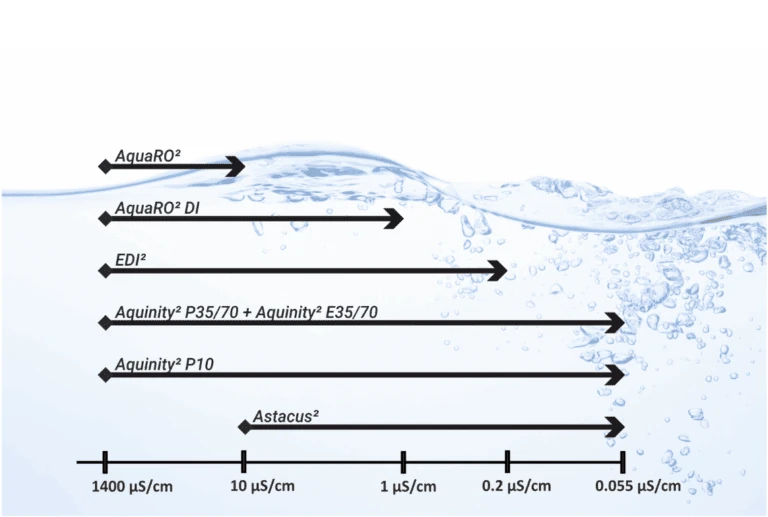
We offer various models.
The ultra pure water systems are tailored to the different requirements of the
corresponding applications:
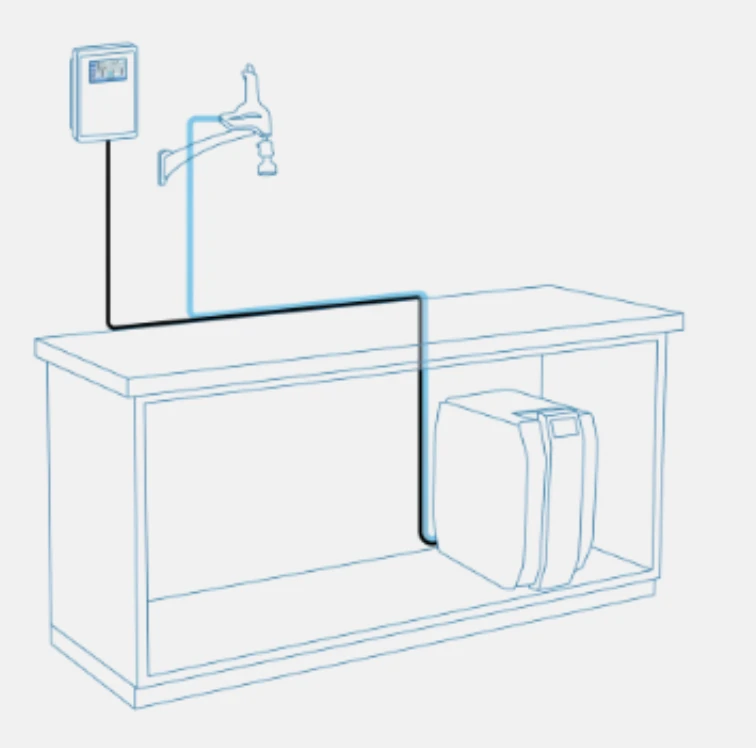
To save valuable countertop space, the system can be ordered as a Bench-Integrated (BI) version. The main unit is installed under the workbench, while the display for monitoring parameters and the flexible dispenser for dispensing purified water are mounted on the wall.
If permanent access to data and controls is not required, the BI panel can also be omitted to reduce costs.
The advantage of the panel is its flexible positioning, which does not have to be in direct proximity to the system.
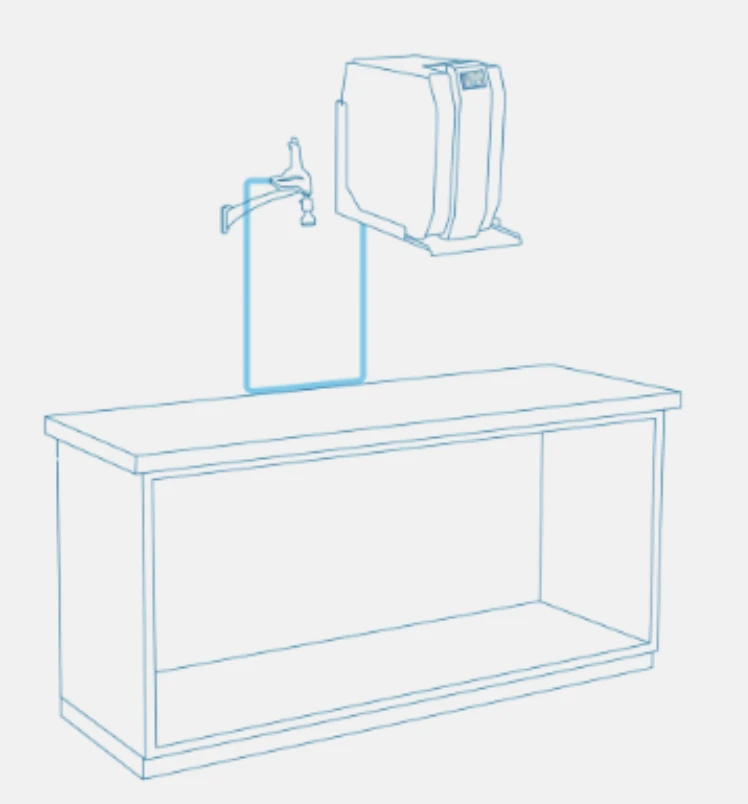
If there is insufficient space on or under the workbench, the system can also be ordered in a wall-mounted version. Depending on the model, both the main unit and the external tank can be securely mounted to the wall. The dispenser is also wall-mounted for convenient handling.
For improved usability, the display can be integrated either at an angle at the bottom or mounted as a standalone BI panel. This ensures the control system remains easily accessible at all times, regardless of the installation height.
Whether you are planning a new ultra pure water system or want to optimize existing systems: The membraPure team will advise you competently, personally, and solution-oriented.

This option allows all systems equipped with a water dispenser to implement volumetrically controlled dispensing of water in 0.1 L increments and a dispensing volume of 0.1 to 99 L. The system prevents containers from overflowing and allows unattended dispensing of water.
This option is not included as standard.

During water production and at defined rest intervals, the system monitors the total organic carbon (TOC) content. The measurement range is between 1 and 999 ppb.
The current values are displayed directly on the screen, allowing for reliable monitoring of potential organic contaminants.
This option is not included as standard and requires an integrated UV lamp, which is only available in the Analytical and Life Science configurations.

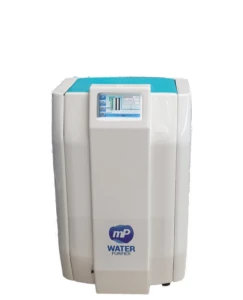
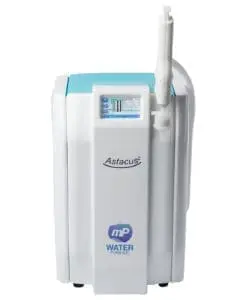
The μS control is limited to use in our Astacus² series. It checks the conductivity of the feed water to protect the ultra pure water cartridge from poor-quality feed water. If the feed water conductivity is too high, the water is discarded and cannot affect the quality of the ultra pure water. This prevents the ultra pure water cartridge from becoming depleted too quickly.

The “Direct Feed” modification replaces the dispenser with a direct feed to a technical consumer. This allows water of the highest possible purity to be delivered to the consumer without intermediate storage.
The flow is automatically regulated via an integrated pressure switch.
Consumers requiring Type I or Type II laboratory water are typically analytical instruments or electrolyzers.

Systems can be retrofitted with a dispenser through an upgrade. This applies to the AquaRO² and EDI systems, which are typically designed to produce into an external tank and then receive the product from there.
Support that goes above and beyond
An ultra pure water system is only as good as the support behind it.
Our pure and ultra pure water systems are characterized by low operating costs and minimal maintenance. The latter can be carried out by the customer themselves.
We offer assembly, installation, and training as a service to our customers in Germany, Austria, and Switzerland, as well as neighboring countries such as Belgium. We are also happy to include validation (IQOQ) if desired.
Furthermore, membraPure supports users worldwide with personalized service, customized training, and comprehensive resources, all provided by qualified distribution partners.
Generally, there are standards according to ASTM (American Society of Testing Materials), ISO 3696, and CLSI (Clinical Laboratory Reagent Water). At membraPure, we based the design of our systems on ASTM D1193 because this standard includes the classification with the most parameters.
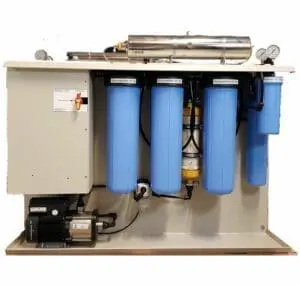
Pure and ultra pure water systems, which begin with purification from drinking water, always have reverse osmosis (RO) upstream. This is followed by technologies such as mixed-bed ion exchangers, electro-deionization (EDI) cells, UV disinfection, and ultrafiltration (UF). Pure water systems with dispensers have a final filter at the outlet that removes any particles from the water.
Depending on the model and configuration, < 10 ppb (Reagent), < 5 ppb (Life Science), or < 3 ppb (Analytical). The TOC monitoring option can be integrated upon customer request. This enables the system to determine the TOC value and display it to the user on the screen.
The choice depends on the required water quality (ASTM Type I, II, or III) and the quality of the source water (drinking water, pretreated water). Daily consumption and the quality of the source water are also crucial for selecting the appropriate ultrapure water system. We always like to use the FACT formula here:
Feedwater: What is the quality of your source water?
Application: What is the application for which the water is used?
Consumption: What is your daily demand? Do peak loads need to be covered?
TOC: Is organic carbon monitoring necessary?
Our ultrapure water systems are designed for installation directly at the point of use. Additionally, the systems for Type II and Type III water can be combined with an existing ring main in the building. Several systems of this type, which have already been installed, feed a centrally located tank.
Our devices are designed for quick and easy installation. This can be carried out independently by the customer or by a service technician from us or our trading partners. Larger systems with a production capacity of more than 40 L/h require professional installation.
All that's required is a water connection, a wastewater connection, and a power connection. The inlet water temperature should be in the range of 5–30 °C. Many models can be integrated directly into existing laboratory infrastructure. Configurations for under-counter, wall-mounted, or tabletop installation are available.
Yes, many models offer a direct-feed option to supply pure/ultrapure water of the appropriate water quality to HPLC, ICP-MS or clinical analyzers and even electrolyzers for hydrogen production.
Many consumables, such as cartridges and filters, can be replaced by the user themselves. Replacing the relevant components can be explained during a commissioned installation and assembly or maintenance visit. For more complex maintenance, membraPure offers and recommends appropriate support.
We recommend annual maintenance. Cartridge replacement depends on usage and water quality. The capacities of individual cartridges are available upon request, or they are stated directly in the quote. Changing the cartridge is easy and can be done in just a few minutes. The software guides the user through the process. We recommend replacing the final filter annually.
Depending on usage, approximately 12 months. The system indicates when a replacement is needed.
These are available in stock and can be shipped within 48 hours or less after receiving your order.
Yes, of course that's possible with us. The advantage of a maintenance contract is that we'll remind you in good time about your next scheduled service, and you'll have priority over customers without a contract when scheduling appointments. You'll also benefit from better pricing.
In this case, please contact our customer service by phone or email. If we are unable to assist you remotely, we will try to dispatch a service technician to your location as quickly as possible if you are located in a German-speaking country. Our local partners will be happy to assist you abroad.
We would like to improve the contact to our customers & partners and send you information and updates about our company and our products
membraPure endeavours as far as reasonably possible to provide correct and complete information on this website. However, membraPure does not guarantee that the information provided is up-to-date, correct and complete. The same applies to the content of external websites that this site refers to directly or indirectly via hyperlinks, programmes, files, contents or hyperlinks to other websites are provided without any expressed or implied warranty.
Contact Us
membraPure reserves the right to alter the information provided on this site without prior notice.
membraPure GmbH, Wolfgang-Kuentscher Str. 14, 16761 Hennigsdorf