From Chemistry Class to the Analytical Lab
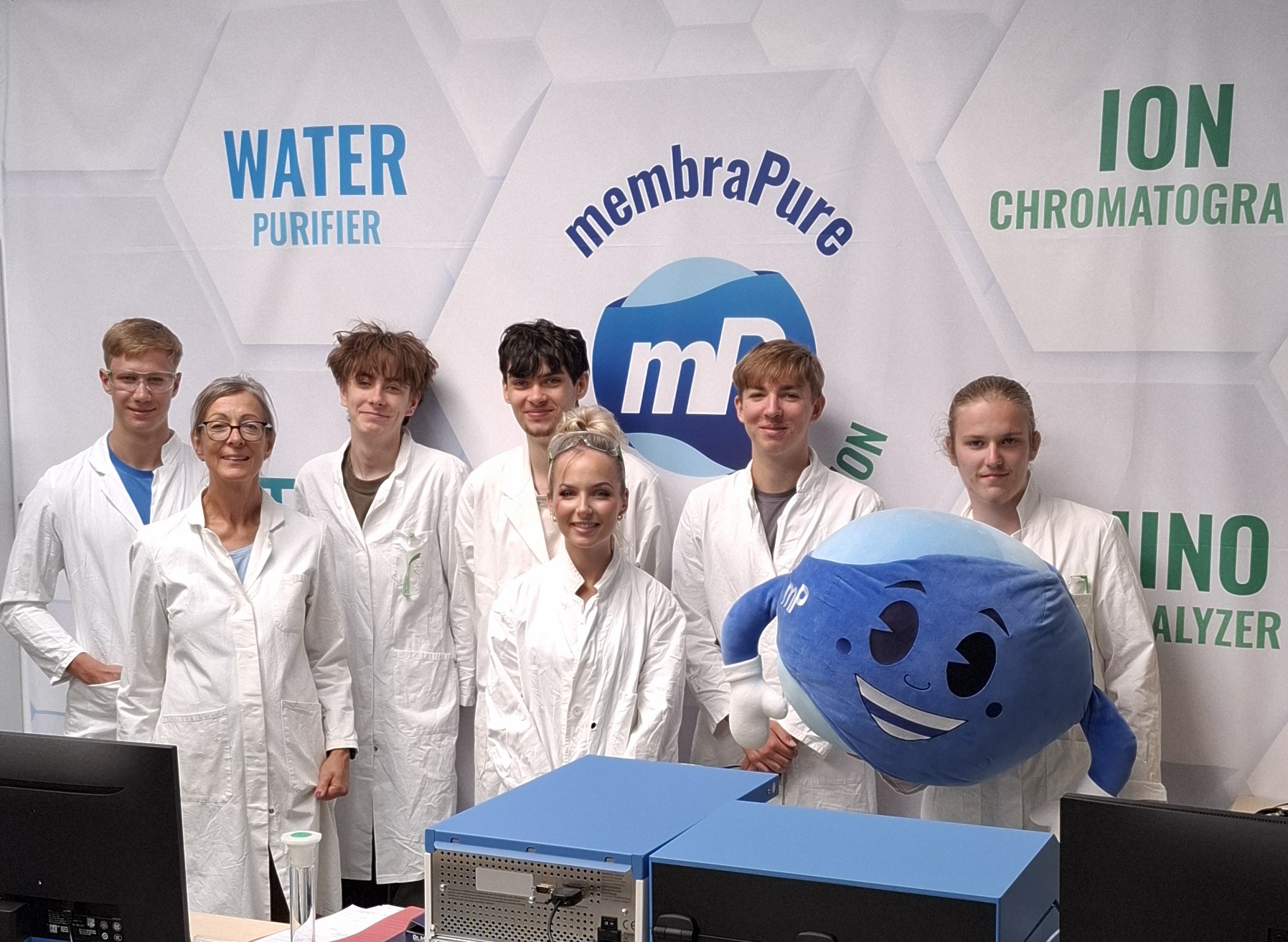
In late August, the 13th-grade chemistry technology class from the Eduard-Maurer-Oberstufenzentrum (EMOSZ) in Hennigsdorf had the unique opportunity to experience chemistry not just in the classroom, but also in a professional setting.
What began with an inquiry from EMOSZ chemistry teacher Ines Paddags—covering topics ranging from ultrapure water and the theory and practical application of water treatment to various purity levels—evolved increasingly toward analytical chemistry during a joint tour of the membraPure facility with Dr. Thorsten Heinlein and a subsequent brainstorming session. Ion chromatography, in particular, became a central focus.
Ultimately, it was decided that the project day would center on calcium and magnesium ions and their quantitative determination.
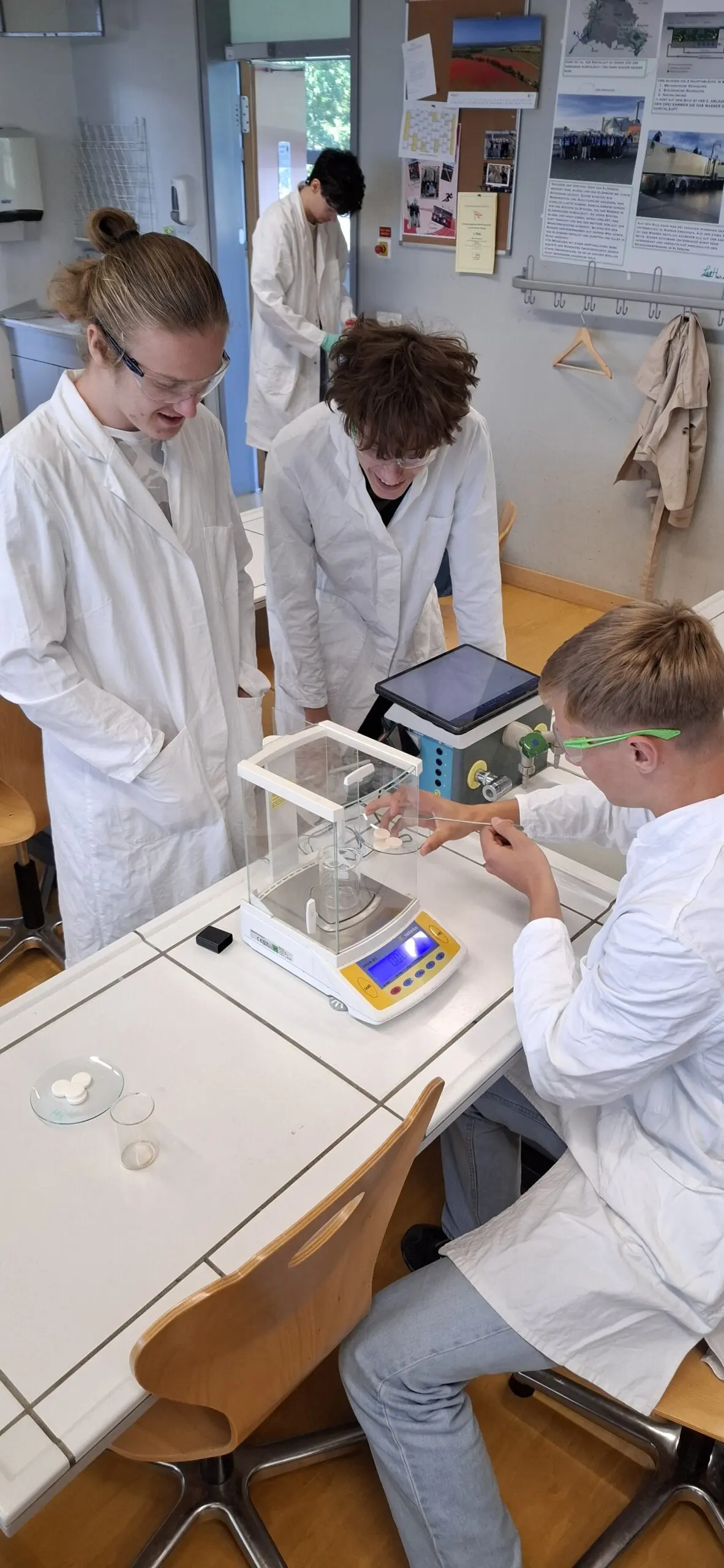
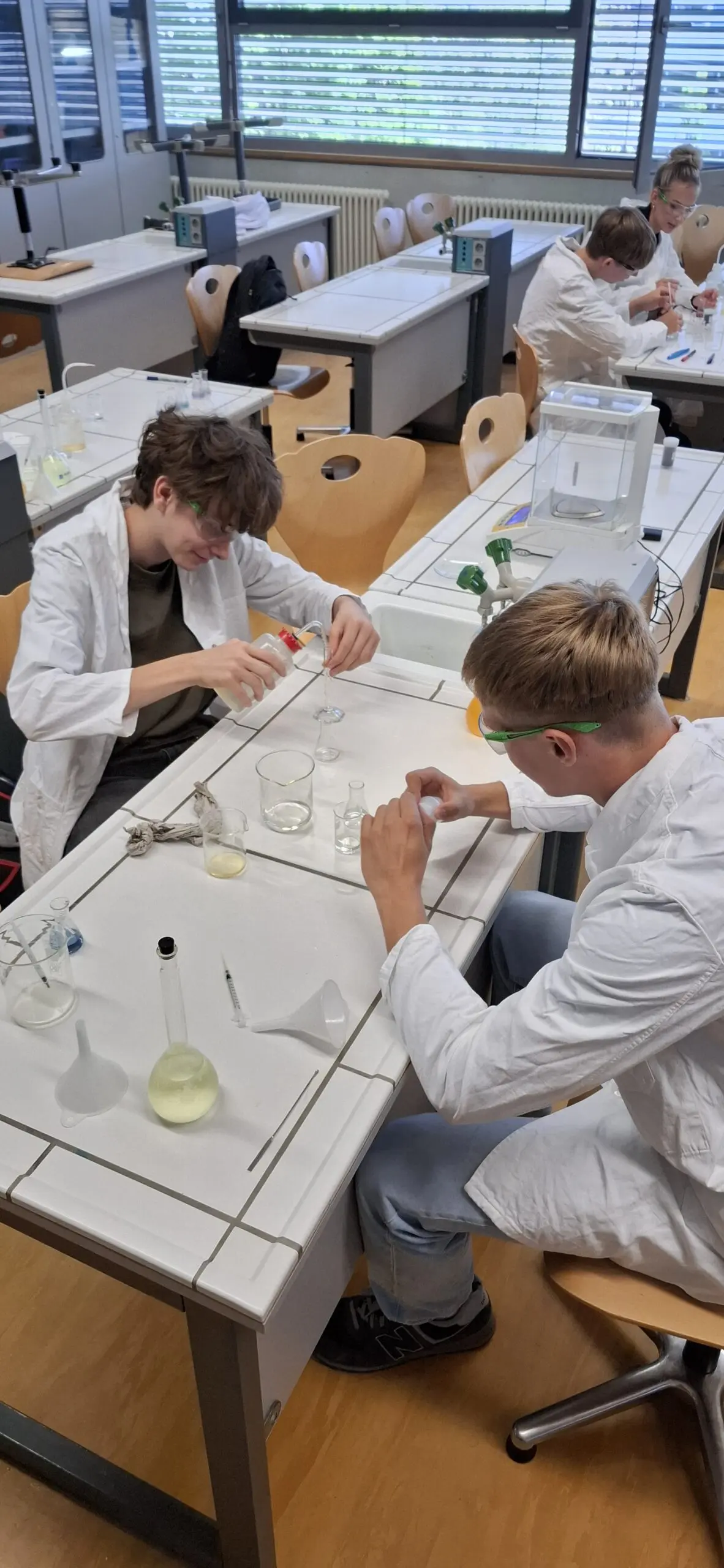
Fresh from the long summer break, the group of six students began the morning with a practical experiment. As part of the project day, they quantitatively determined the calcium and magnesium content of a commercially available mineral supplement tablet using micro-scale complexometric titration, subsequently comparing their results with the manufacturer’s specifications on the packaging.
This hands-on activity allowed the students to directly apply and deepen their understanding of titration fundamentals previously learned in class. Although they were already familiar with the general principle of titration, this specific method was new to them. Consequently, they eagerly awaited the color changes at the respective endpoints—phenomena none of them had previously observed in practice.
The students performed three determinations each and calculated an average value to account for potential variations. If a result did not align with the others, a fourth titration was quickly performed, ensuring that three highly comparable values were available for the final analysis.
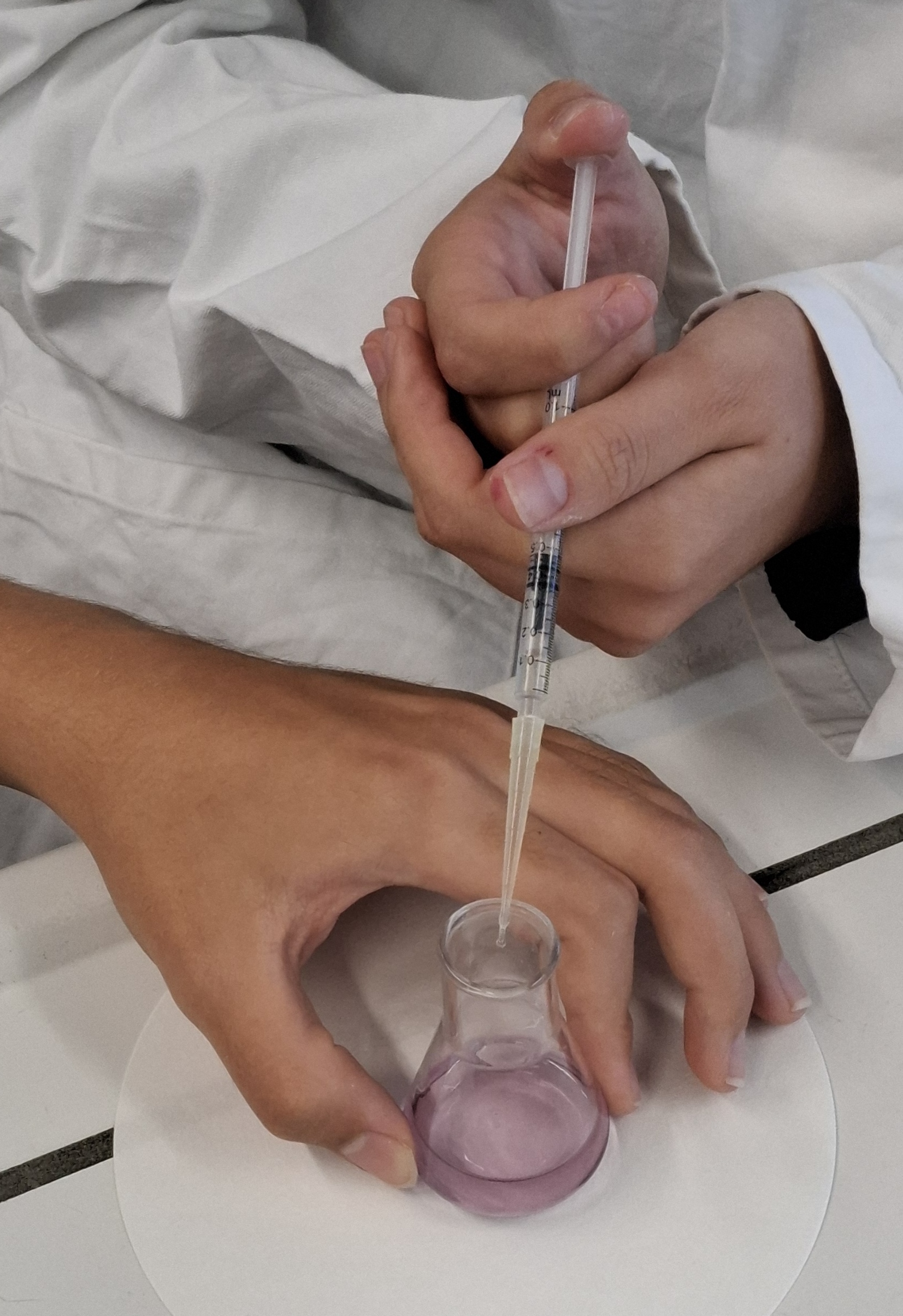
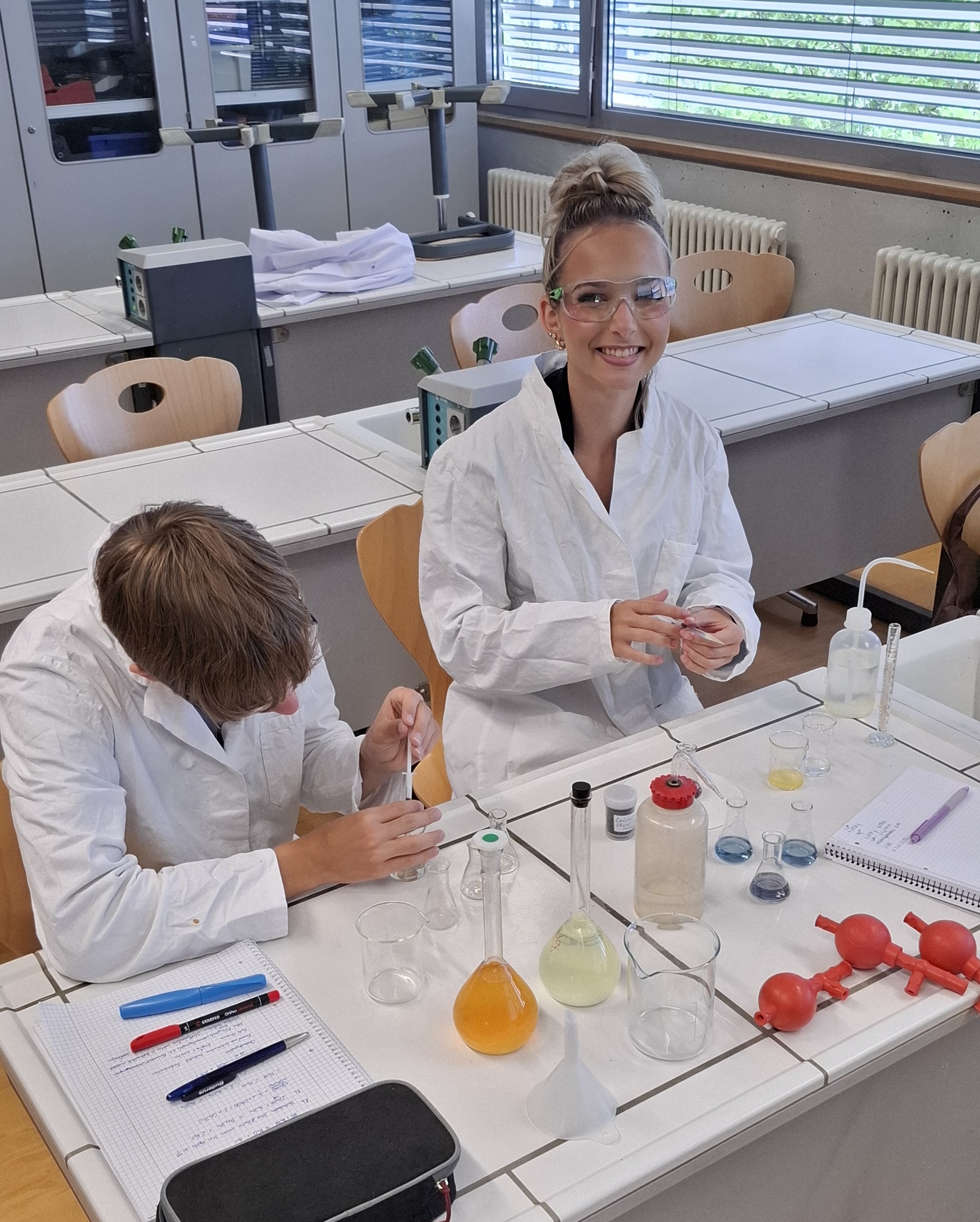
Working on a micro-scale was also a new experience for the students. They practiced handling the syringes and dispensing precise amounts before proceeding to the actual titrations.
At the same time, the importance of working carefully and precisely during chemical-analytical procedures became evident. From the exact weighing of the effervescent tablets and their complete dissolution in a defined volume to determining the correct titration endpoint, the students had to pay attention to numerous details. Precise weighing was particularly important, as it allowed the subsequent results to be referenced to a standard unit, thereby making it easier to compare the findings of the different groups.
Following an initial classroom discussion of the results from the three group activities, the company membraPure was introduced in greater detail during a joint lunch and a subsequent tour of the facility. In the process, the students gained insights into membraPure’s workflows and areas of operation, and learned more about the development and application of modern systems for water purification and analysis.
These devices enable the analysis of a wide variety of samples and play a crucial role, particularly in modern laboratory analysis.
The theoretical concepts regarding clean water in the laboratory—specifically ultrapure water—could then be directly applied in practice. For instance, the eluent—consisting of dilute nitric acid at a specific concentration—had to be prepared for the ion chromatography experiments.
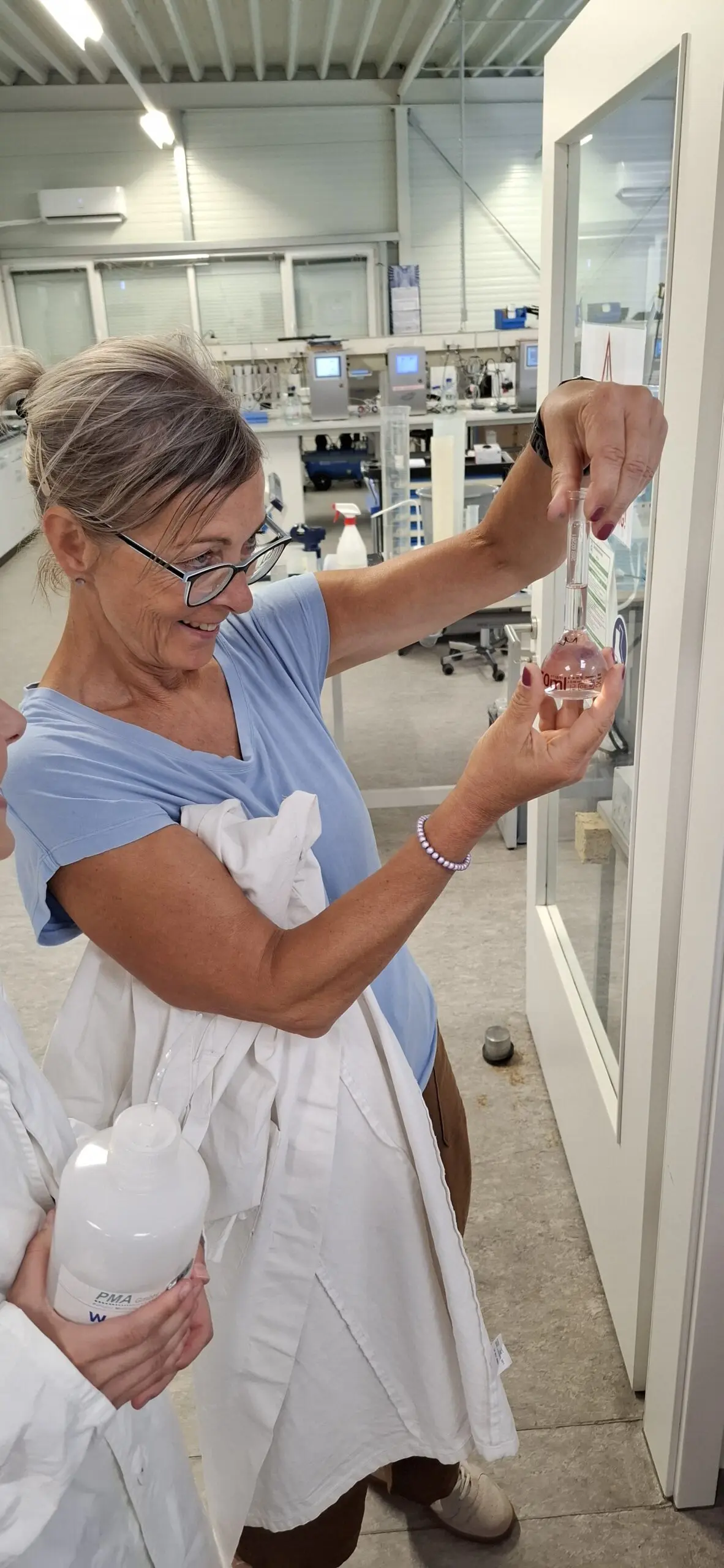
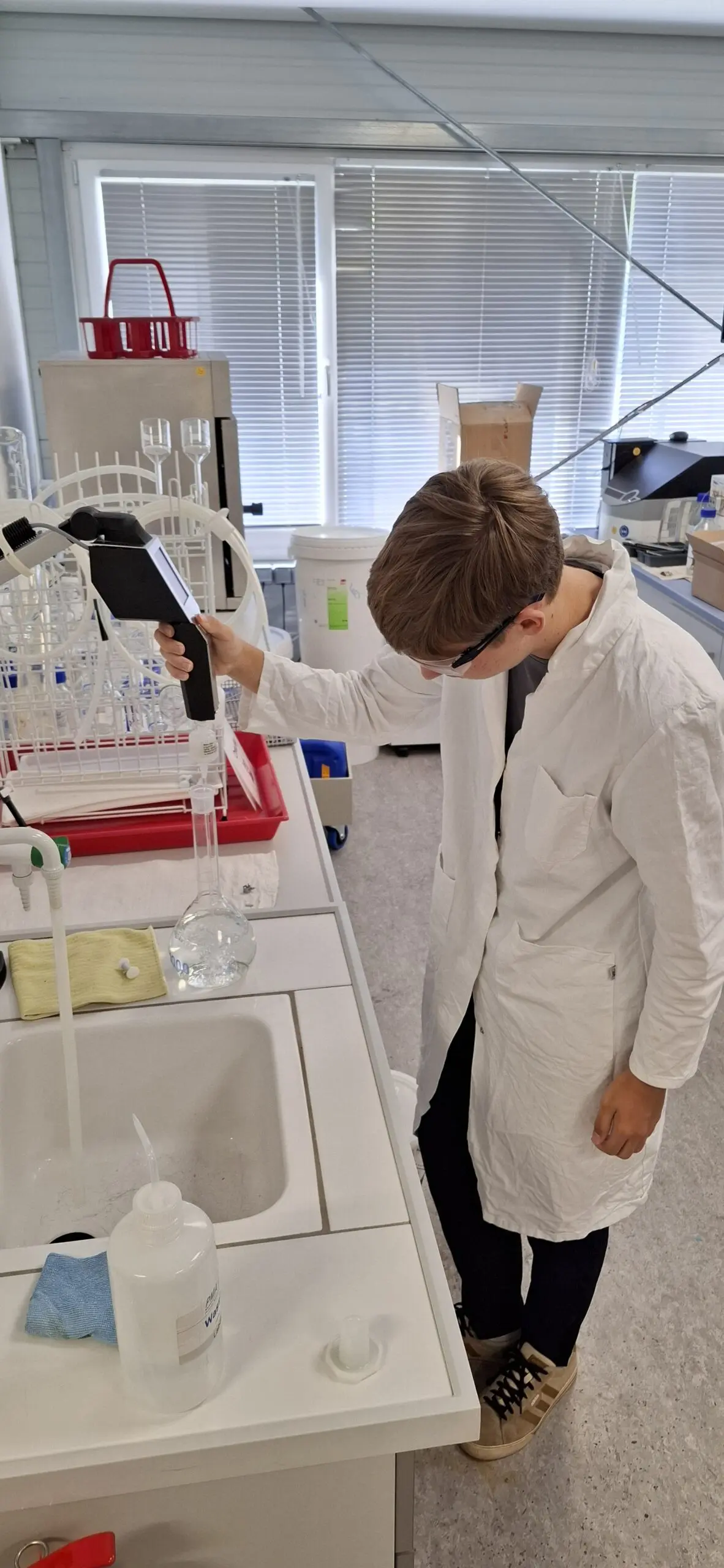
Another question that arose was how best to prepare the samples brought along for analysis. The samples to be analyzed consisted of the dissolved effervescent tablets that had previously been used for the titrations.
The standard used—an ion mixture with known calcium and magnesium concentrations, analyzed as a reference at the start of every measurement sequence—served as the benchmark for sample preparation. After some careful thought and the necessary dilution calculations, the dilution factor was determined; the samples were then diluted to bring their concentrations to a level similar to that of the standard.
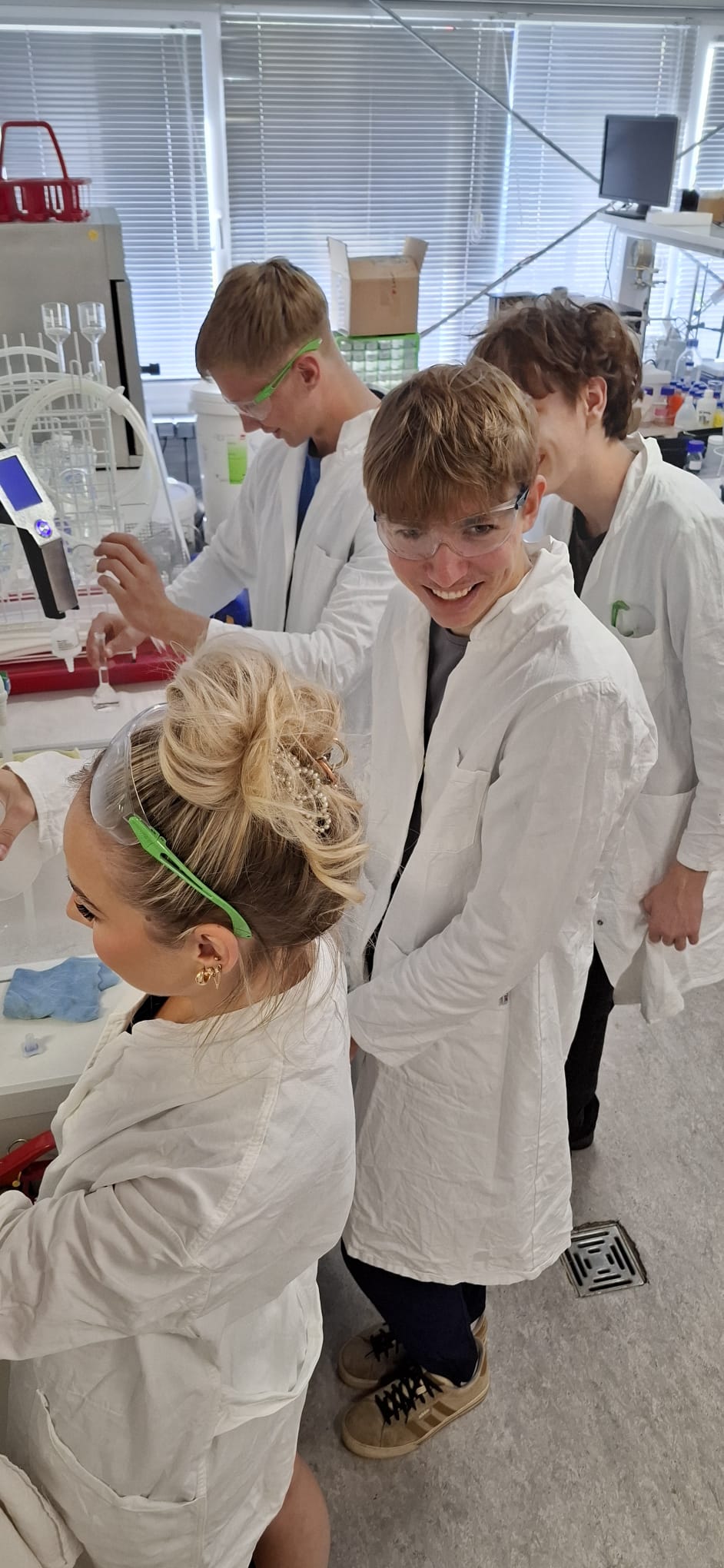
Once the solutions were prepared, they were transferred into appropriate sample vials, labeled, and placed in the autosampler, and the sequence was programmed into the ion chromatograph.
The components and operating principles of the ion chromatograph were explained right at the instrument to provide insight into the technology. This allowed the group of students to get to know a modern analytical method and experience firsthand how chemical substances are analyzed using professional laboratory equipment.
It was not possible to provide the analysis results during the project day itself. They were made available afterward, meaning the interpretation of the results had to take place later, without the presence of membraPure. Nevertheless, we are very curious to see what emerged from the discussion.
A follow-up meeting with the teachers has already been scheduled. We plan to review what worked well, identify areas for improvement, and discuss how we might repeat the project day in the future. After all, following this first joint attempt, we are certain of one thing: this is definitely something worth repeating!
It was a project day that demonstrated that chemistry takes place not only in the classroom but also right in the heart of the modern working world.