
Introduction
Amino acids are key components of human metabolism. They serve not only as building blocks for proteins but also play a role in energy production, immune regulation, neurotransmitter synthesis, hormone metabolism, muscle building, and recovery processes. Consequently, alterations in the amino acid profile can indicate metabolic imbalances.
In this context, a prevention-oriented health test was developed in collaboration with OakLabs Scientific.
The health test described here is based on the measurement of selected amino acids and related metabolites. These are interpreted in relation to various areas of health, including sleep and mood, chronic inflammation, cardiovascular risk, type 2 diabetes risk, and thyroid metabolism, as well as fitness, muscle building, and recovery.
While membraPure GmbH was responsible for the analytical execution, OakLabs Scientific handled customer communication, the provision and shipment of sample collection materials, the interpretation and assessment of the analysis results, and the delivery of results to customers.
The test is designed as a lifestyle and preventive screening tool. It does not replace a medical diagnosis or professional medical advice. Abnormal results should be evaluated by a physician, particularly if symptoms are present or if there are existing risk factors.
The basic profile includes, among others, tryptophan, kynurenine, histidine, isoleucine, leucine, lysine, methionine, phenylalanine, threonine, and valine. The extended test profile allows for the additional measurement of arginine, asymmetric dimethylarginine, alanine, proline, taurine, glutamine, serine, and tyrosine.
These analytes were selected due to their association with key metabolic pathways. Tryptophan and kynurenine are relevant markers of tryptophan-kynurenine metabolism, a process linked to immune activation and inflammation. The branched-chain amino acids—valine, leucine, and isoleucine—are essential for muscle metabolism and energy balance; they are also discussed in the context of insulin resistance and the risk of type 2 diabetes. Arginine and asymmetric dimethylarginine are involved in nitric oxide metabolism and are therefore of interest for assessing endothelial function and cardiovascular risk. Tyrosine and phenylalanine are precursors to important signaling molecules and are linked to metabolic pathways involving catecholamines and thyroid function.

Sample preparation and analysis
The customer collects the sample using the provided health test kit, which contains the materials necessary for capillary blood collection and return shipping. A 300 µL lithium-heparin tube is used for this purpose. It is important that the tube contains exactly 300 µL of blood to ensure optimal analysis. As an alternative to the finger-prick lancet, an alternative blood collection system for the upper arm (“TAPmicro”) can be ordered via the online shop; instructional videos are available to guide the user through the correct procedure.
In addition, health- and lifestyle-related information is collected via a questionnaire and taken into account when presenting the results later. The questionnaire is not part of the analytical measurement itself but supplements the laboratory results with contextual information. The combination of the quantitative amino acid profile and the questionnaire data forms the basis for the personalized presentation of results.

After receipt in the laboratory, the blood sample is registered and clearly identified using the associated sample ID. The sample is then prepared for plasma separation using centrifugation. After subsequent protein precipitation, the sample is ready for amino acid analysis.
The amino acids are separated using ion exchange chromatography and then derivatized using post-column derivatization with ninhydrin and detected photometrically. The chromatographic separation is carried out using a physiological high-resolution method that is suitable for the determination of free amino acids and selected amino acid-related biomarkers.
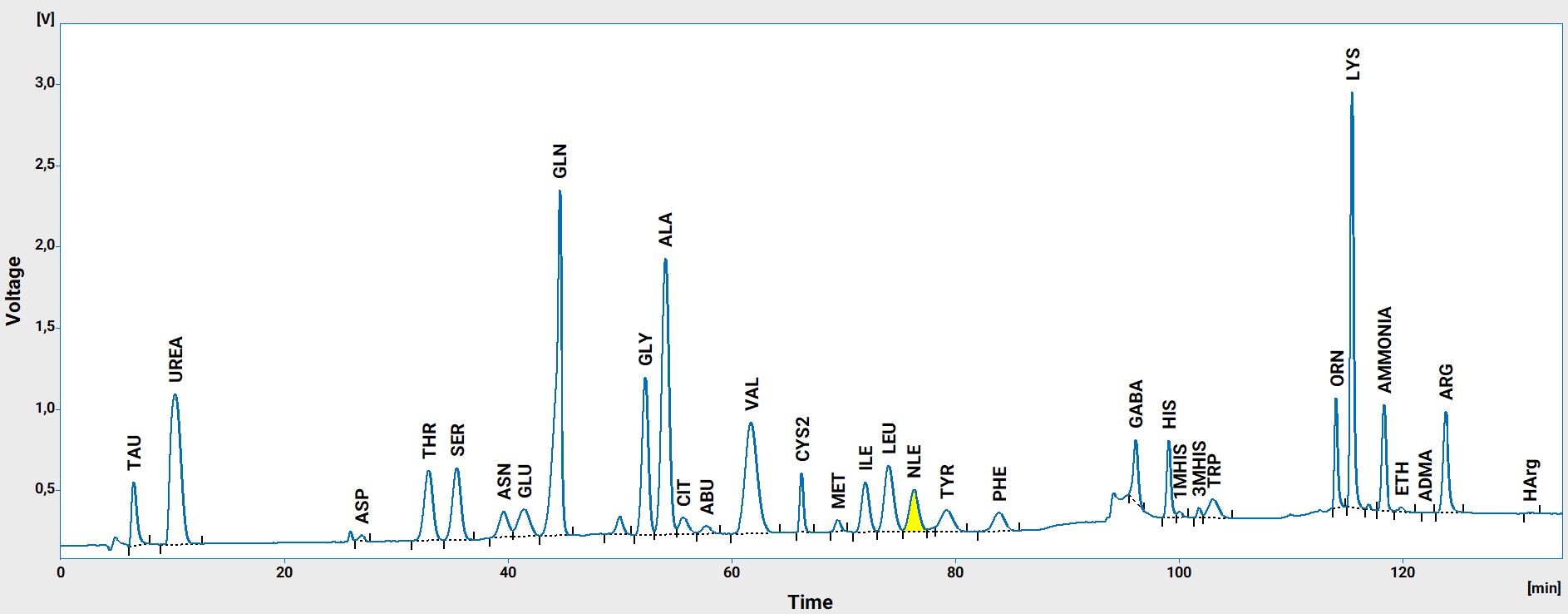
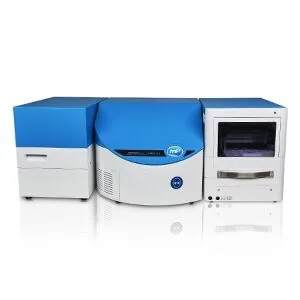
Figure 3: ARACUS amino acid analyzer.
Suitable amino acid standards and an internal standard are used for quantification. The standard employed encompasses the relevant proteinogenic amino acids and is supplemented by additional amino acid-related biomarkers required for the test profile. For quality control purposes, standards are analyzed regularly within the measurement sequence to ensure system stability and the comparability of results.
Upon completion of the measurement, the chromatographic data are analyzed, and the concentrations of the selected amino acids and amino acid-related biomarkers are calculated.
The results are subsequently integrated with information from the health questionnaire and presented in a personalized results report. The detailed evaluation logic and internal decision thresholds form part of the proprietary analysis procedure and are not disclosed in this application note.
Investigated analytes
Table 1: Selected amino acids and amino acid-related biomarkers from the health test.
| Analyte | Abbreviation | Metabolic Relevance |
| Tryptophan | Trp | Precursor of serotonin, melatonin, and kynurenine |
| Kynurenine | Kyn | Markers of tryptophan degradation and immune-associated metabolic pathways |
| Histidine | His | Proteinogenic amino acid; histamine metabolism and buffering capacity |
| Isoleucine | Ile | Branched-chain amino acid; muscle and energy metabolism |
| Leucine | Leu | Branched Chain Amino Acid; Protein synthesis and muscle metabolism |
| Valine | Val | Verzweigtkettige Aminosäure; Energie- und Muskelstoffwechsel |
| Lysine | Lys | Essential amino acid; protein and collagen metabolism |
| Methionine | Met | Essential amino acid; methylation and sulfur metabolism |
| Phenylalanine | Phe | Precursor of tyrosine |
| Tyrosine | Tyr | Precursor of catecholamines and thyroid hormones |
| Threonind | Thr | Essential amino acid; protein and mucous membrane metabolism |
| Arginine | Arg | Nitric oxide metabolism and endothelial function |
| Asymmetric dimethylarginine | ADMA | Endogenous inhibitor of NO synthase; cardiovascular relevance |
| Alanine | Ala | Glucose-alanine cycle and energy metabolism |
| Proline | Pro | Collagen and connective tissue metabolism |
| Taurin | Tau | Osmoregulation, bile acid conjugation, and muscle metabolism |
| Glutamine | Gln | Nitrogen transport, immune and intestinal metabolism |
| Serin | Ser | One-carbon metabolism and phospholipid synthesis |
Table 2: Selected analysis areas of the health test and exemplary relevant amino acids
| Analysis Area | Relevant Analytes | Metabolic Classification |
| Sleep and Mood | Tryptophan, Kynurenine, Tyrosine, Phenylalanine | Amino acids and metabolites related to neurotransmitter and tryptophan metabolism |
| Chronic inflammation | Tryptophan, Kynurenine, Histidine | Parameters related to immune-associated metabolic pathways |
| Glucose and energy metabolism | Valine, leucine, isoleucine, alanine | Amino acids relevant to energy balance, muscle metabolism, and metabolic balance |
| Cardiovascular-metabolic | Arginine, ADMA | Parameters related to nitric oxide metabolism and endothelial function |
| Thyroid-related metabolism | Tyrosine, phenylalanine, methionine, lysine | Amino acids related to precursor availability and general protein metabolism |
| Fitness and Recovery | Leucine, isoleucine, valine, glutamine, taurine, alanine, proline | Amino acids related to muscle metabolism, recovery, and protein supply |
Results and discussion
The results are interpreted not by looking at individual, isolated amino acids, but by examining defined metabolic patterns. This involves relating the measured concentrations of selected amino acids and amino acid-related metabolites to scientifically established metabolic pathways. Additionally, information from the health and lifestyle questionnaire is taken into account to place the laboratory values within an individual context.
The amino acid profile can indicate whether essential and functionally relevant amino acids are available in sufficient quantities. Based on this, recommendations regarding protein intake, protein quality, meal structure, recovery, and training support can be derived.
Chronic inflammation, sleep, and mood
Tryptophan and kynurenine are key analytes in the basic profile. Tryptophan is an essential amino acid that serves as a precursor to serotonin and melatonin. These metabolic pathways are linked to mood, sleep, and circadian regulation.
Kynurenine is produced from tryptophan via the kynurenine pathway. This pathway can be influenced by immune activation and inflammatory processes. Consequently, a change in the tryptophan-to-kynurenine ratio can serve as an indicator of altered immune-associated metabolic activity.
Glucose and energy metabolism and branched-chain amino acidsGlucose and energy metabolism and branched-chain amino acids
The branched-chain amino acids valine, leucine, and isoleucine are essential amino acids that play a key role in muscle and energy metabolism. At the same time, elevated BCAA concentrations have been linked in scientific literature to insulin resistance and an increased risk of type 2 diabetes.
In the health test, the BCAA profile is therefore viewed as a metabolic indicator of glucose and insulin metabolism. Elevated BCAA levels do not constitute a diagnosis of diabetes; however, when considered alongside lifestyle factors, body weight, diet, and other laboratory parameters, they may indicate a need for preventive action.
Cardiovascular risk
Arginine and asymmetric dimethylarginine are relevant markers for assessing nitric oxide metabolism. Arginine serves as a substrate for the formation of nitric oxide, which plays an important role in vascular function and endothelial regulation. ADMA can inhibit NO synthase and is therefore discussed in connection with endothelial dysfunction and cardiovascular risk.
The determination of arginine and ADMA can provide additional information about the regulation of vascular function. However, the values should not be viewed in isolation, but in connection with established risk factors such as blood pressure, lipid profile, smoking, age, body weight and family history.
Thyroid-related metabolism
Tyrosine and phenylalanine are relevant for thyroid-related metabolic pathways. Phenylalanine can be converted to tyrosine, and tyrosine is an important precursor in the synthesis of thyroid hormones. Methionine and lysine additionally contribute to general protein and metabolic function.
Amino acid analysis cannot diagnose thyroid disease. However, it can provide information as to whether relevant precursors are available in sufficient quantities. If symptoms such as fatigue, sensitivity to cold, weight gain or reduced performance occur, established thyroid parameters such as TSH, fT3, fT4 and thyroid antibodies should also be checked by a doctor.
Fitness, muscle metabolism, and recovery
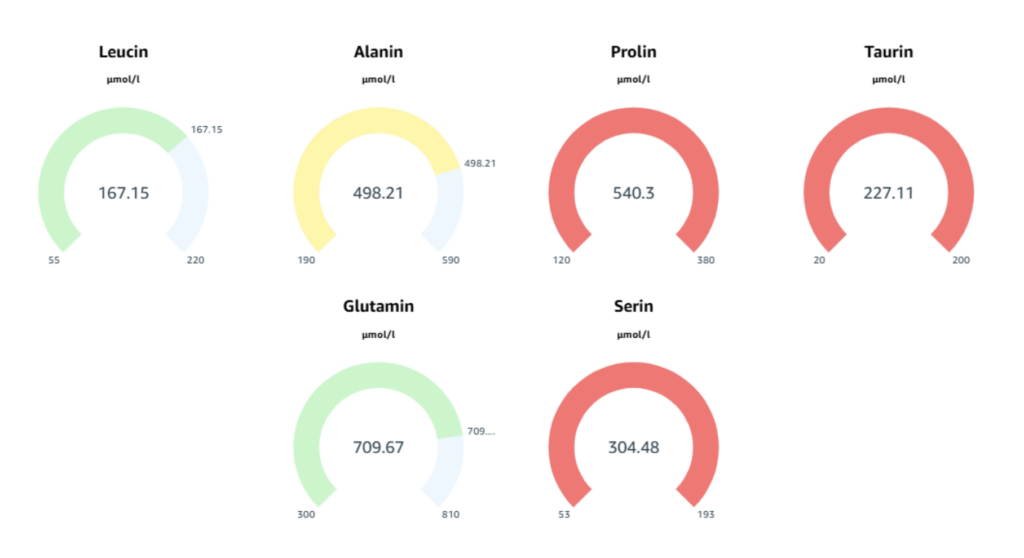
Branched-chain amino acids, as well as alanine, proline, taurine, glutamine, and serine, are of particular interest for fitness, muscle building, and recovery. These analytes are linked to muscle protein synthesis, energy metabolism, connective tissue metabolism, nitrogen transport, and recovery capacity.
Conclusion
The ARACUS amino acid analyzer enables the determination of amino acid profiles in human blood samples using ion-exchange chromatography, post-column derivatization with ninhydrin, and photometric detection at 440 nm and 570 nm. This method is suitable for the quantitative analysis of selected amino acids and amino acid-related biomarkers as part of a preventive health assessment.
The health assessment described combines analytical measurement data with a metabolic perspective on selected amino acid patterns. The resulting profile can support personalized recommendations regarding sleep and mood, chronic inflammation, cardiovascular metabolism, glucose and energy metabolism, thyroid-related metabolism, as well as fitness and recovery.
References
Capuron L. et al. Chronic low-grade inflammation in elderly persons is associated with altered tryptophan and tyrosine metabolism: role in neuropsychiatric symptoms. Biological Psychiatry, 2011.
Sorgdrager F. J. H. et al. Tryptophan Metabolism in Inflammaging: From Biomarker to Therapeutic Target. Frontiers in Immunology, 2019.
Hunt C. et al. Effect of Immune Activation on the Kynurenine Pathway and Depression Symptoms: A Systematic Review and Meta-Analysis. Neuroscience & Biobehavioral Reviews, 2020.
Pan J. X. et al. Diagnosis of major depressive disorder based on changes in multiple plasma neurotransmitters: a targeted metabolomics study. Translational Psychiatry, 2018.
Kurgan S. et al. Influence of periodontal inflammation on tryptophan-kynurenine metabolism: a cross-sectional study. Clinical Oral Investigations, 2022.
Flores-Guerrero J. L. et al. Plasma branched-chain amino acids and risk of incident type 2 diabetes. Journal of Clinical Endocrinology & Metabolism, 2018.
Schlesinger S. et al. Asymmetric and symmetric dimethylarginine as risk markers for total mortality and cardiovascular outcomes: a systematic review and meta-analysis. PLOS ONE, 2016.
membranePure GmbH. ARACUS Amino Acid Analyzer product information.
OakLabs Scientific GmbH. My health test product and science information.